
What Metrics Matter Most for a 24/7 Stream (And How Monetization Actually Works)
Eliran Mukdasi
Founder & CEO, Tribecast
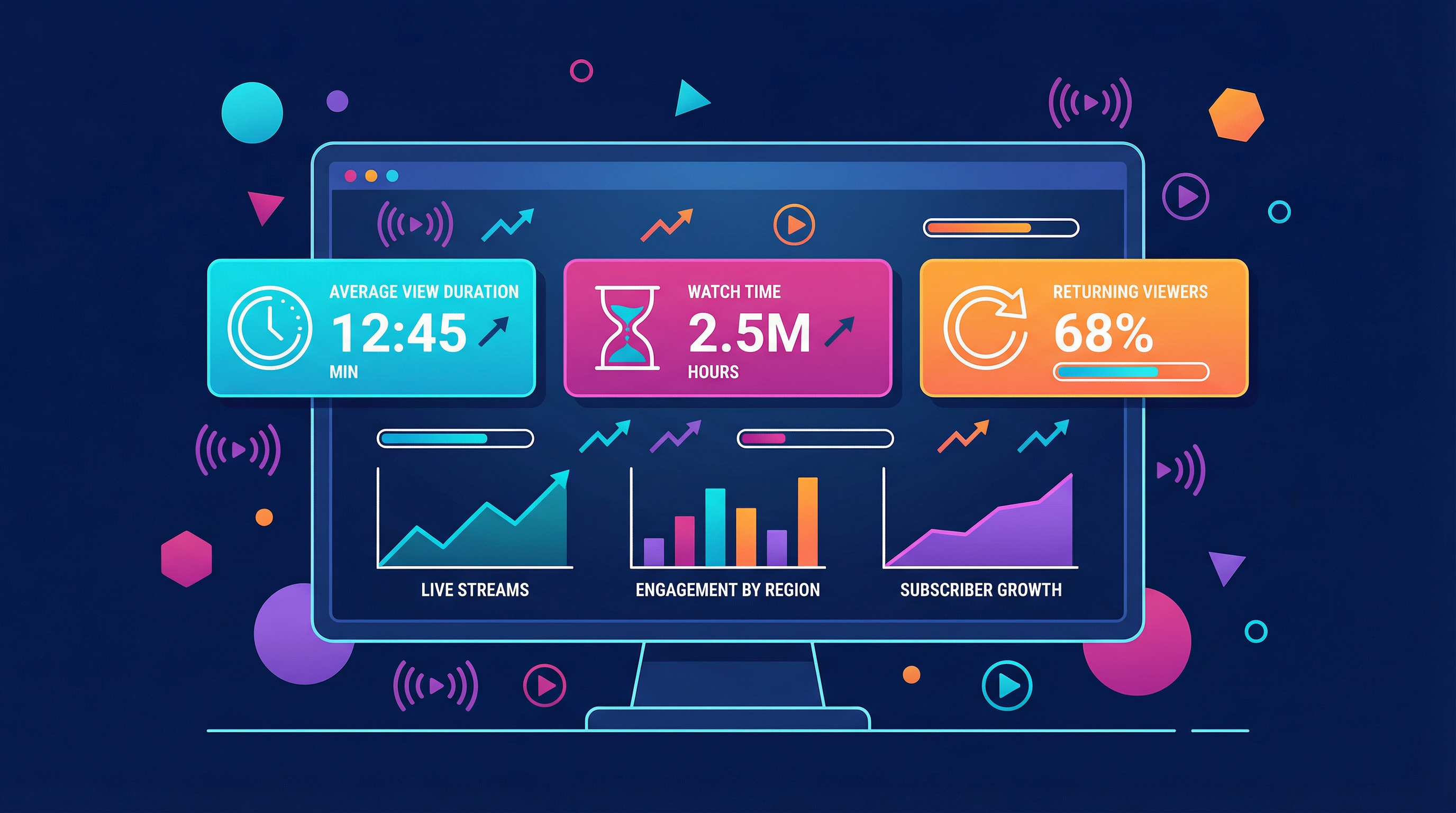
A 24/7 live stream can become one of the strongest assets on a channel—or a silent cost center.
The difference is not effort. It is metrics.
Most people track the wrong numbers. They look at peak viewers, subscriber count, or chat noise. Those metrics feel good, but they do not drive distribution or revenue.
This article answers two questions clearly:
- What metrics matter most for a 24/7 stream
- Can you monetize live streams, and how
If you understand these, you can predict whether a stream will compound or stall.
The Short Answer
The metrics that matter most for a 24/7 stream are:
- Average view duration
- Watch time
- Returning viewers
If these three are healthy, monetization follows. If they are weak, no growth hack will save the stream.
Everything else is secondary.
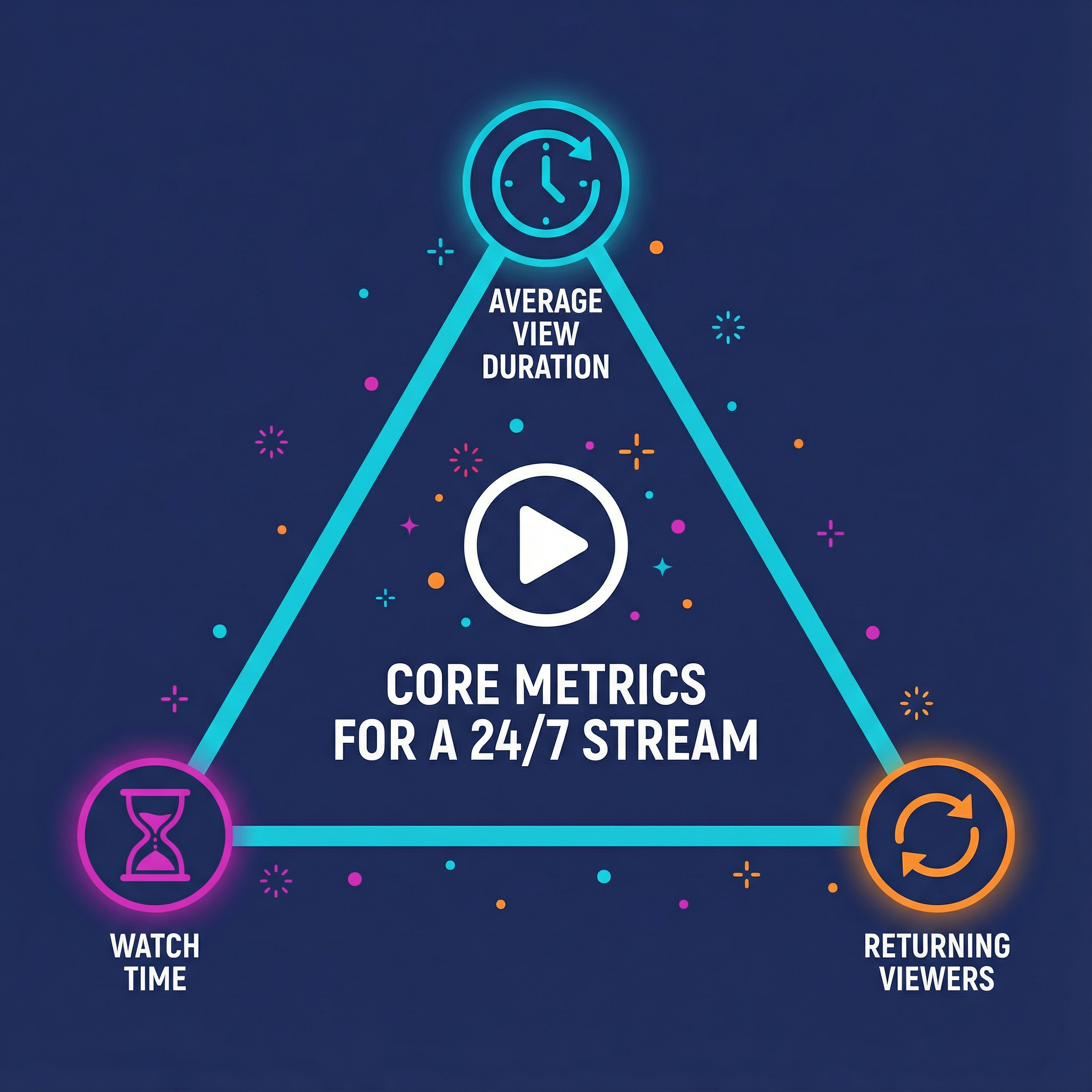
These three metrics form the foundation of every successful 24/7 stream. They signal to the algorithm that your content is valuable, engaging, and worth promoting. Master these, and everything else becomes easier.
Metric One: Average View Duration
Definition
Average view duration is the average amount of time a viewer stays in your live stream during a session.
Why It Matters
For live streams, this metric is the strongest signal of viewer satisfaction.
YouTube is not asking whether someone clicked. It is asking whether they stayed.
Longer sessions tell the algorithm three things:
- Your stream fits the viewer intent
- The experience is comfortable to leave running
- The content is not causing bounce behavior
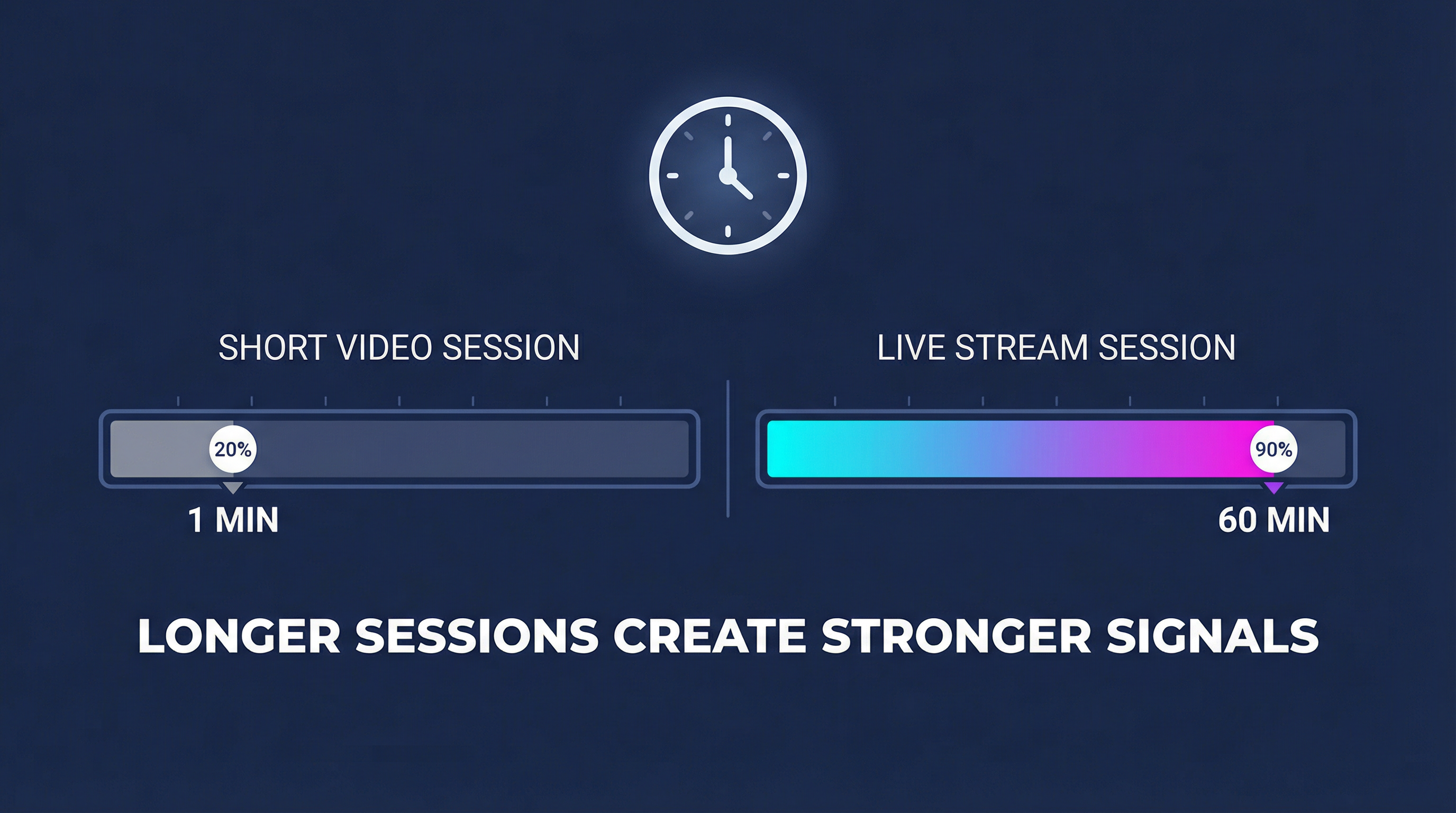
For music and ambient formats, this metric is where live streams dominate uploads. A three-minute video watched for one minute creates one minute of attention. A live stream watched for sixty minutes creates an entirely different signal.
Common Mistake
Optimizing for peak concurrent viewers instead of session length.
A smaller audience that stays longer beats a larger audience that leaves quickly. This is counterintuitive for many creators who chase vanity metrics like "most viewers online." But the algorithm doesn't care about peaks—it cares about sustained attention.
Think of it this way: would you rather have 1,000 people watch for 2 minutes each (2,000 total minutes) or 100 people watch for 30 minutes each (3,000 total minutes)? The second scenario generates more watch time, stronger algorithmic signals, and ultimately better monetization.
Metric Two: Watch Time
Definition
Watch time is the total number of minutes viewers spend watching your stream. This metric is absolute, not relative.
Why It Matters
Watch time is the fuel behind recommendations.
YouTube rewards channels that keep people on the platform longer. Live streams do this naturally when the format is right.
Ten viewers staying for one hour create more value than one hundred viewers staying for five minutes.
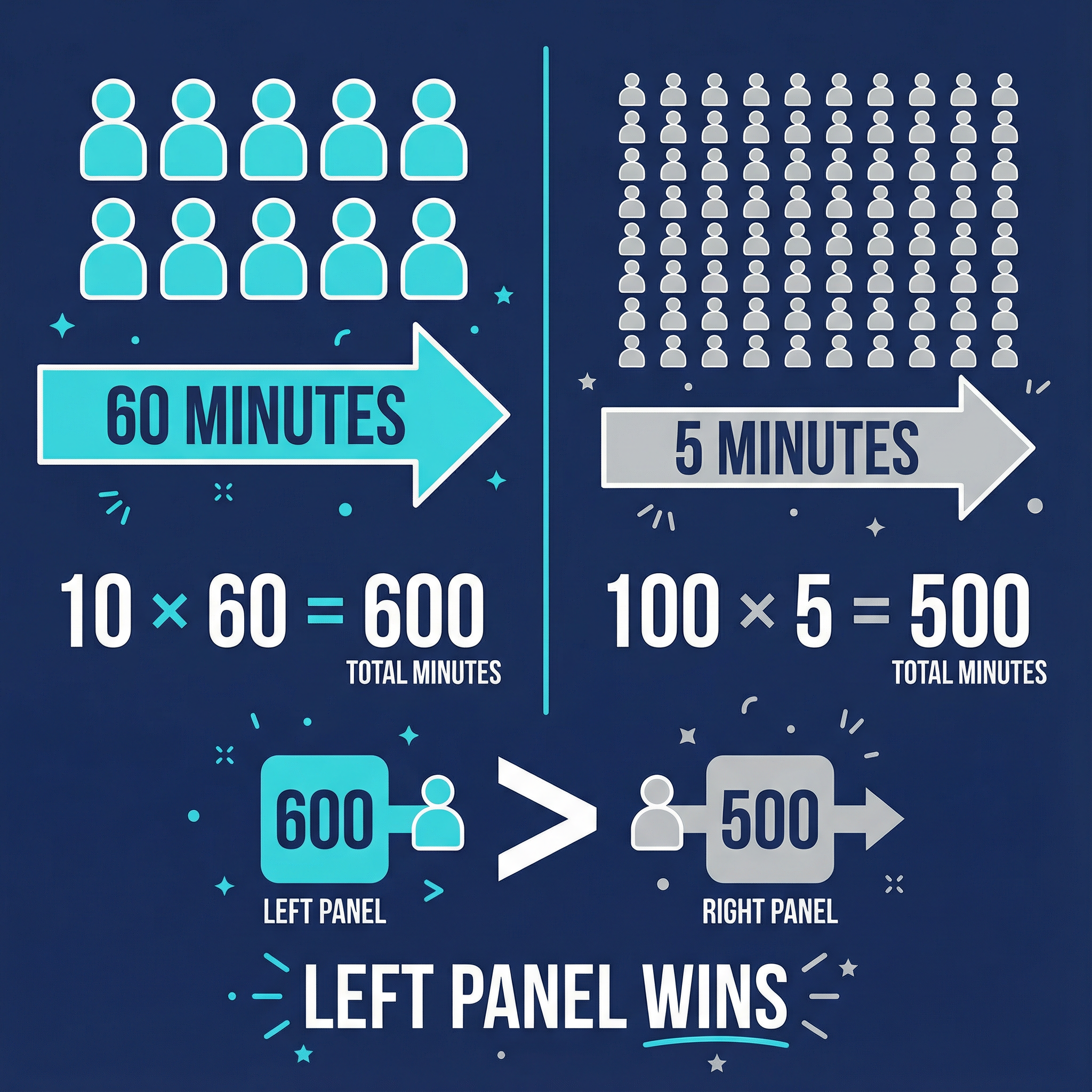
Live streams win because they stack minutes continuously, hour after hour, day after day. This is why a stable stream with modest concurrency can outperform viral short content over time.
What to Focus On
- Consistency of long sessions: Aim for predictable, sustained viewing patterns
- Smooth playback with no interruptions: Technical reliability is non-negotiable
- A clear promise that matches the content: Set accurate expectations
If viewers can press play and forget about it, watch time compounds. The best 24/7 streams become background companions—trusted, reliable, and always there.
Metric Three: Returning Viewers
Definition
Returning viewers are people who come back to your stream after a previous session.
Why It Matters
This metric signals habit formation.
When viewers return, YouTube learns that your channel is part of their routine. That changes how your entire channel is treated, not just the stream.
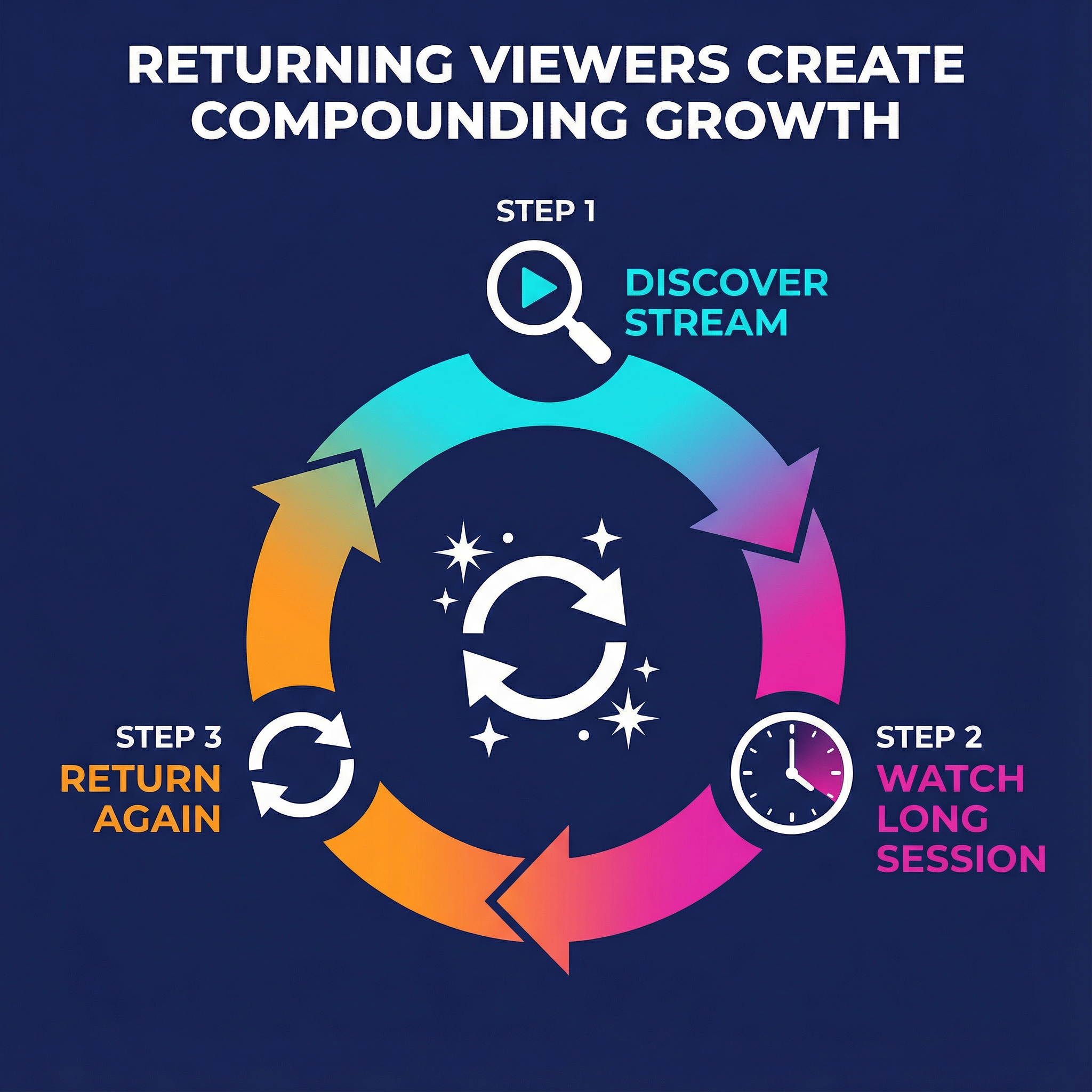
Returning viewers lead to three effects:
- Stronger recommendation confidence: The algorithm trusts your content more
- Higher likelihood of your new uploads being surfaced: Your entire channel benefits
- More stable monetization over time: Predictable audiences create predictable revenue
This is why live streams often lift performance across a channel, even for non-live content. A strong 24/7 stream creates a gravitational pull that benefits everything you publish.
What Good Looks Like
You should see a clear segment of viewers who return week over week. The exact percentage varies by niche, but any visible upward trend is a strong sign. If you're seeing 40%+ returning viewers within a 7-day window, you're building something sustainable.
Metrics That Matter Less Than You Think
Some metrics look important but do not drive outcomes on their own:
- Subscriber count without engagement: Vanity metric
- Likes without session depth: Surface-level interaction
- Chat activity without retention: Noise without substance
These can support growth, but they do not replace the three core metrics. If average view duration, watch time, and returning viewers are weak, these signals will not save the stream.
It's like building a house on a weak foundation. You can add beautiful decorations, but if the structure isn't sound, it will collapse.
Can You Monetize Live Streams (And How)
Short Answer
Yes. Live streams unlock more monetization paths than standard uploads, but only if retention is strong.
Monetization is not the starting point. It is the outcome of attention.
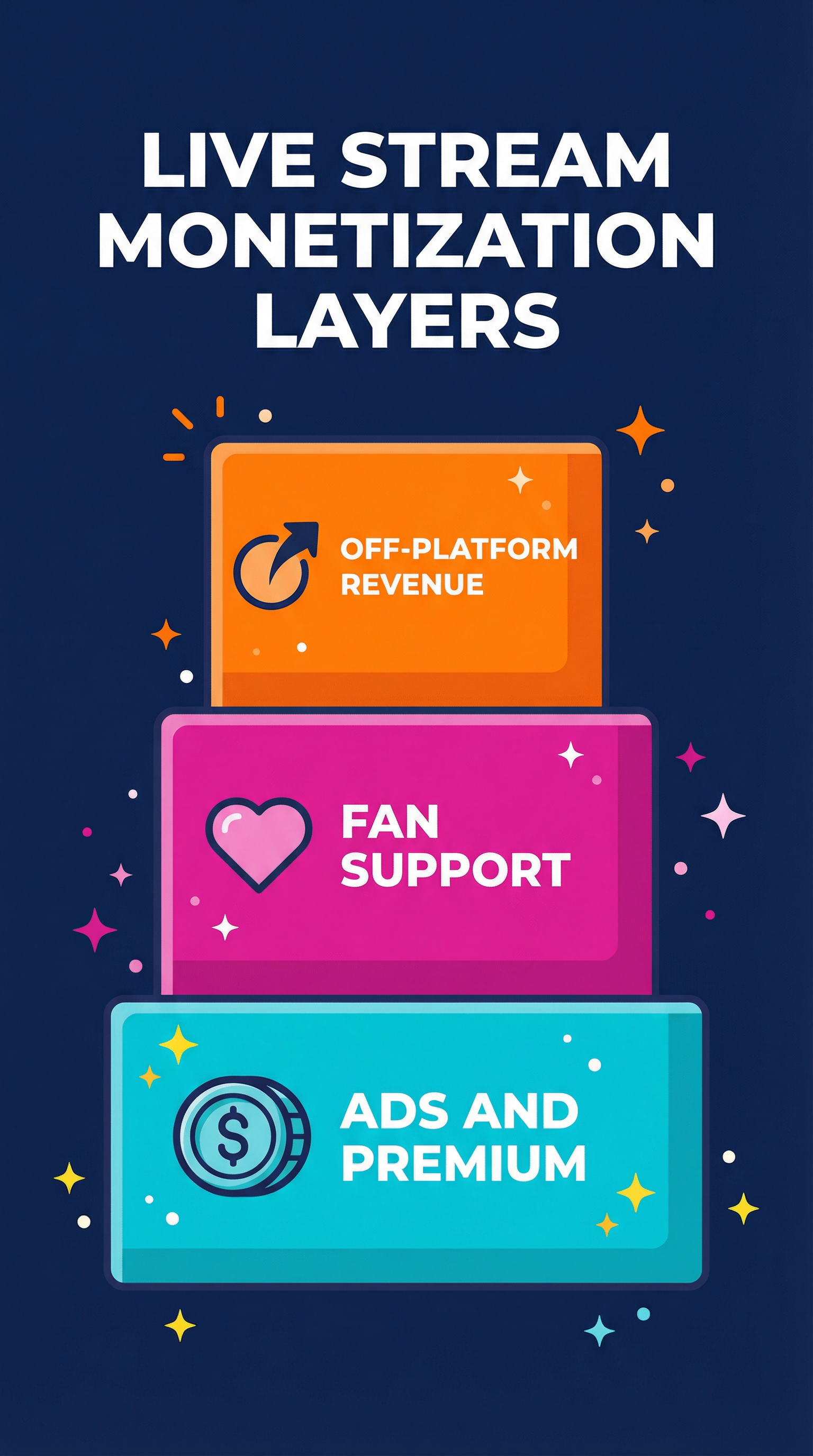
Think of monetization as a three-layer stack, each building on the foundation below it.
Monetization Layer One: Ads and Premium Revenue
Live streams monetize through watch page ads and premium subscriptions.
Premium revenue is often underestimated. Viewers who pay for an ad-free experience still generate revenue based on time spent. Long sessions increase this significantly.
If your stream keeps people watching, this layer grows naturally. The math is simple: more minutes watched = more ad impressions = more revenue. For premium subscribers, longer watch time means higher payouts from YouTube's premium revenue pool.
Many creators are surprised to discover that their 24/7 stream generates 3-5x more revenue per viewer than their VOD content—purely because of session length.
Monetization Layer Two: Fan-Driven Support
Live streams unlock interactive monetization:
- Memberships: Recurring monthly revenue from loyal fans
- Super Chats: Direct tips during live moments
- Stickers: Visual engagement that generates revenue
- Merch Shelf: Product placement directly in the stream
This layer depends on community, not scale. A smaller loyal audience can outperform a larger passive one.
The key is creating moments worth supporting. When viewers feel connected to your stream, they want to contribute. This is why streams with strong returning viewer metrics often see disproportionately high fan support—the relationship has deepened beyond casual viewing.
Monetization Layer Three: Off-Platform Revenue
Live streams are powerful traffic drivers.
Common paths include:
- Music platforms: Drive Spotify, Apple Music, or SoundCloud streams
- Merchandise: Direct product sales
- Email lists: Build owned audience assets
- Events and tickets: Promote live shows or virtual experiences
Descriptions, pinned chat messages, on-screen prompts, and QR codes all work when attention is sustained. The longer someone watches, the more likely they are to take action on your calls-to-action.
This is where the real leverage happens. A successful 24/7 stream becomes a perpetual marketing machine, constantly introducing new viewers to your broader ecosystem.
How Metrics and Monetization Connect
Here is the key principle:
Retention creates monetization. Monetization does not create retention.
If your stream increases average view duration, watch time, and returning viewers, revenue becomes a byproduct. If those metrics are weak, adding monetization features will not fix the core problem.
This is why you should never start with monetization. Start with value. Start with retention. Start with creating something people want to return to. The money follows naturally.
Quick Operational Checklist
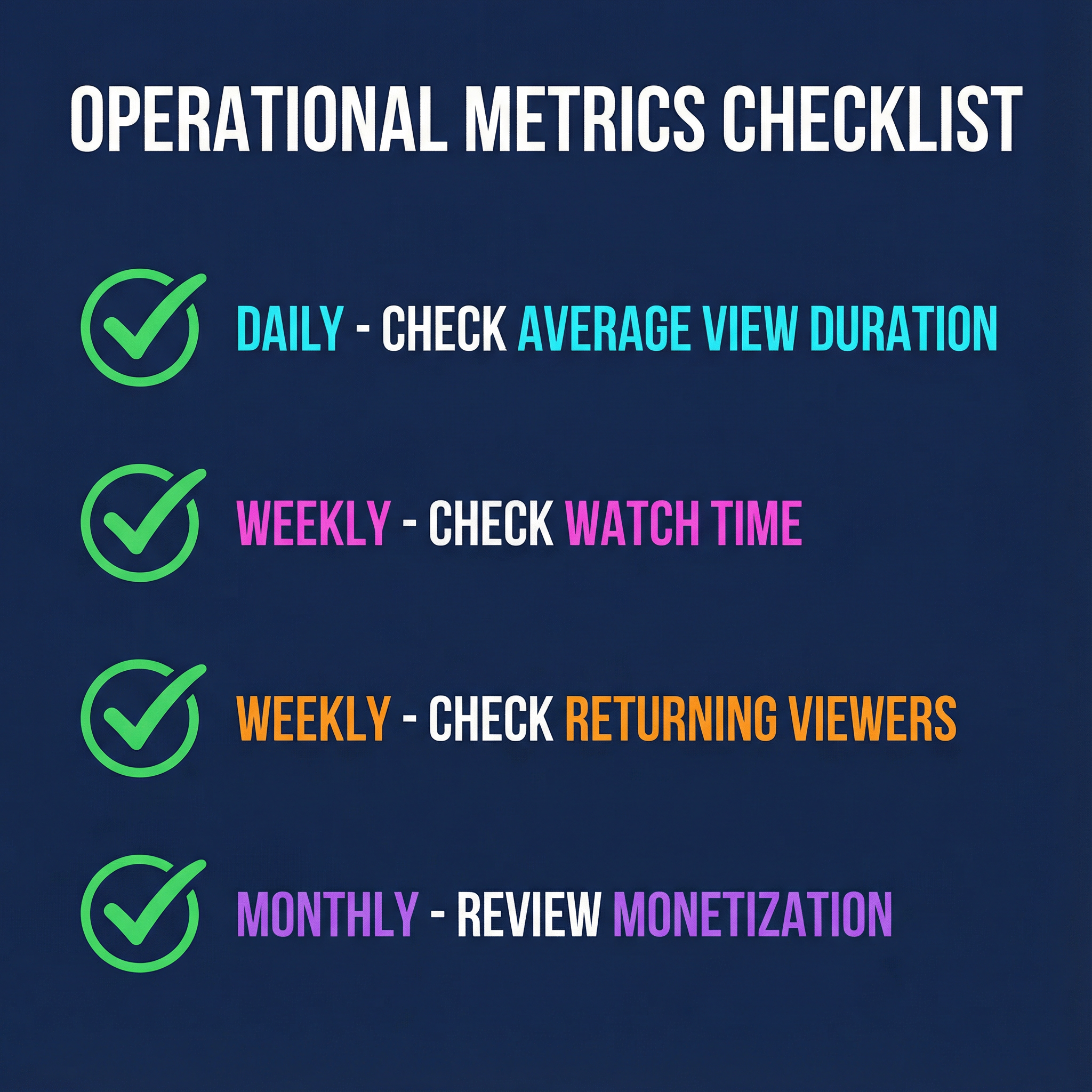
Daily
- Check average view duration trend
Weekly
- Review total watch time
- Review returning viewers
Monthly
- Review monetization performance in context of retention
This cadence ensures you're tracking what matters without getting lost in data. Daily checks keep you aware of immediate issues. Weekly reviews show trends. Monthly analysis connects performance to revenue.
Set up a simple spreadsheet or dashboard with these metrics. Watch for patterns. Celebrate improvements. Investigate declines. The data will tell you what's working.
Frequently Asked Questions
Do live streams make more money than uploads?
They can. Live streams generate longer sessions, which increases total watch time and premium revenue. But the format matters—a poorly executed stream won't outperform a well-optimized VOD.
How many viewers do you need to monetize?
There is no fixed number. Sustained retention matters more than peaks. We've seen streams with 50 concurrent viewers outperform channels with 500 concurrent viewers—purely because of session length and returning viewer rates.
Does monetization hurt growth?
Not if retention is strong. Poor retention is what hurts growth. If viewers are staying and returning, adding monetization features (like mid-roll ads or membership perks) typically has minimal negative impact.
Can small channels monetize live streams?
Yes. Small channels with long sessions and returning viewers can monetize effectively. In fact, smaller channels often have more engaged communities, which can lead to higher per-viewer revenue through fan support.
Final Takeaway
A 24/7 stream succeeds or fails on three metrics:
- Average view duration
- Watch time
- Returning viewers
Track these relentlessly. Improve them deliberately. Monetization will follow.
The creators who win with 24/7 streams aren't the ones chasing viral moments or peak concurrency. They're the ones who understand that sustainable success is built on retention, not reach.
Start with the metrics. Build for the long session. Create for the returning viewer. Everything else is noise.
Tagged
About the Author
Maximize Your Streaming Revenue
Learn how Tribecast helps creators build monetization funnels that convert viewers into paying fans across multiple revenue streams.
Apply for early access and start building your sustainable creator business.